

Gross profit is a key performance metric calculated by subtracting COGS from net sales. It represents the residual income after covering the direct costs of production but before accounting for other operating expenses. Directly following operating revenues is the calculation of Cost of Goods Sold (COGS). COGS represents the direct multi step income statement expenses incurred to produce the goods or services sold during the reporting period.
- It is a type of financial statement used to evaluate the company’s performance in the short term.
- Users can gain insights into how a company’s primary business activities generate revenue and affect costs compared to the performance of the non-primary business activities.
- So, we get various details of the advantage of a multi-step income statement from the above points.
- Non-operating income and expenses include revenues and costs not related to the primary business activities.
Complete non-operating expenses and revenues

A Profit and loss statement (P&L statement) is also called an income statement. An income statement or P&L statement is the summary of revenues, expenses, cost of goods sold, administrative expenses, and taxes for a specific time period. By separating operating and non-operating expenses, the multi-step income statement gives you a detailed breakdown of your net profit.

Pros and Cons in Terms of Simplicity, Clarity, and Comprehensiveness
The key components of a multi-step income statement include gross profit, operating income, non-operating incomes and expenses, and the final net income. Operating income, also known as income from operations, is derived by subtracting total operating expenses from gross profit. This metric reveals the profitability generated solely from the company’s core business activities, excluding non-operating revenues and expenses. Preparing a multi-step income statement involves a detailed breakdown of revenues and expenses, allowing for a comprehensive analysis of a company’s financial health. By following the steps outlined in this tutorial, you can accurately compile each section of the income statement, from net sales to net income.
Customizing Your Income Statement to Track Specific Business Finances
The siloed breakdowns in multiple-step income statements allow for a deeper analysis of margins and provide more accurate representations of the costs of goods sold. Such specificity gives stakeholders a sharper view of how a company runs its business because it details how the gross, operating, and net margins compare. A single-step income statement offers a simplified snapshot of a company’s revenue and expenses. This straightforward document conveys a company’s revenue, expenses, and bottom-line net income.
(and avoid failing sections?)
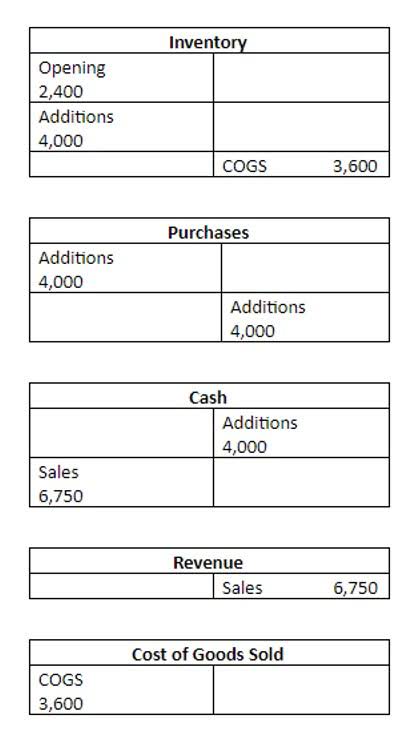
It represents the actual profit the company retains after all operating and non-operating expenses, including taxes, have been paid. This figure is essential for stakeholders, as it provides the clearest picture of the company’s profitability and ability to generate earnings. It is simply Cash Inflow from Merchandise sales and Cash Outflow from purchasing the QuickBooks merchandise.
Create a free account to unlock this Template

Multi-step income statement is one of the two most commonly used income statement formats, the other being the single-step income statement. Multi-step income statement involves more than one subtraction to arrive at net income and it provides more information than a single-step income statement. The most important of which are the gross profit and the operating profit figures. It shows the progression from sales revenue to net income by separating operating and non-operating activities. Gather all the necessary financial information for the reporting period, which could be a quarter or a year. With a single step statement, all the financial elements—revenues, expenses, gains, and losses—are combined into one comprehensive overview without any further categorization.
- A multi-step income statement is an intricate financial document that provides a detailed breakdown of a company’s financial performance over a specific period.
- A consistent or growing operating income suggests strong management and effective cost control, while declining figures may warrant further investigation.
- These activities include a business issuing debt (getting a loan), repaying the amounts borrows, obtaining cash from stockholders, and providing these stockholders a return on their investment.
- All revenues and gains are presented first, followed by all expenses and losses.
COGS is the direct cost attributable to the production of the goods sold by the company. This includes the cost of materials and direct labor used in creating the product. Net sales represent the revenue from the sale of goods or services, after deducting returns, allowances, and discounts. Find your state’s tax rate, multiply it with your pretax income and you will get the income amount you will have to pay. Cost of goods sold includes the labor cost, materials cost, and overhead costs you have made in offering your goods or services. So, you’ll see Cost of Goods Sold QuickBooks ProAdvisor broken out into its own section, with Gross Profit calculated as the Net Sales minus Cost of Goods Sold.